Poison Apple: A Designer's Review for Real Projects
As a designer who has spent years curating machine embroidery design libraries and testing files for small business viability, I approach every new asset with a critical eye. When I first loaded the Poison Apple file into my digitizing software, I wasn't just looking at a spooky icon; I was evaluating a potential revenue driver for the upcoming Halloween season. This isn't about whether the apple looks cute on a screen. It is about how it translates to thread, how it sits on fabric, and whether it will survive the wash cycle of a busy customer's life.
The First Impression: Mood and Visual Weight
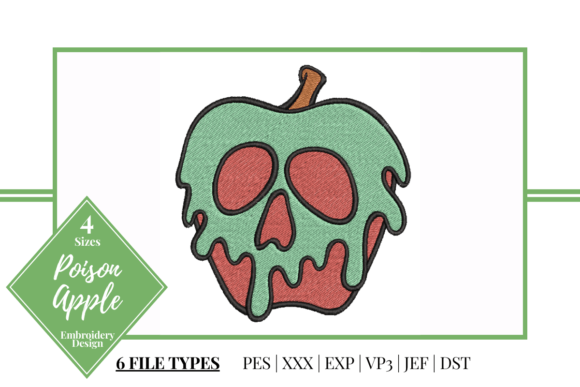
The immediate visual personality of the Poison Apple is striking without being cluttered. In the digital preview, the shape is bold and instantly recognizable. For an embroidery project, this clarity is vital. Many seasonal designs suffer from over-digitization, where too many tiny details get lost in the stitching process or cause thread breaks. Here, the layout feels balanced. The stem and leaf provide enough contrast to break up the roundness of the fruit, creating a silhouette that works well even from a distance.
I found myself thinking immediately about the mood this creates. It strikes that perfect balance between whimsical and slightly ominous, which is exactly what we want for holiday embroidery. It doesn't scream "scary" so much as it whispers "stylishly gothic." This makes it versatile. It could work on a child's baby embroidery item if you soften the colors, or on a heavy-duty sweatshirt embroidery piece for adults if you stick to deep crimsons and blacks. The visual weight suggests it can stand alone as a focal point, rather than needing to be part of a larger, crowded scene.
Testing the Design: A Real-World Scenario
To truly understand the utility of this digital embroidery file, I imagined a specific use case: preparing a limited run of custom tote bags for a local boutique client. The goal was to create a handmade product that felt premium yet affordable. I visualized placing the Poison Apple on the front panel of a natural canvas bag. Because the design relies heavily on its shape, the choice of thread colors becomes the defining factor. If I used standard reds, it might look generic. However, by altering the palette to include a metallic green for the leaf and a gradient effect using dark purples and reds for the apple, the finished product would pop against the neutral background.
In this scenario, the design acts as a brand anchor. For an Etsy seller or a small shop product line, having a consistent, high-quality motif helps build recognition. Customers often return to shops because they trust the aesthetic. The Poison Apple offers a cohesive look that fits well with other design assets in a fall collection. Whether printed on a printable mockup for social media or stitched onto actual inventory, the design holds its own. It feels substantial enough to justify a higher price point on a custom apparel item, signaling quality craftsmanship rather than a cheap add-on.
Navigating Fabric and Hoop Challenges
While the design is strong, experienced designers know that context is everything. There are specific situations where the Poison Apple requires careful handling. First, consider the hoop size. While the file appears compact, the density of the fill stitches means you need adequate space to maneuver the hoop without distorting the fabric. If you attempt to squeeze this design into a tiny hoop for a cap or a small patch, you risk puckering, especially around the curved edges of the apple.
Fabric texture is another critical variable. On smooth cotton or linen, the fill stitch and satin stitch elements should lay flat and crisp. However, on textured fabrics like fleece or thick wool, the definition of the apple's outline might blur slightly. This isn't necessarily a dealbreaker, but it changes the finish. For stretchy fabric like jersey knit, you must use the correct stabilizer. Without a tear-away or cut-away backing that supports the tension, the design could warp after the first wash, ruining the professional look of your personalized gift.
Furthermore, be cautious with dark fabrics. While the description notes that colors can be altered, the base layer of the apple needs to be opaque enough to cover the background material. If you are working on black denim or navy sweatshirts, ensure your embroidery file settings allow for a solid underlay. Otherwise, the dark fabric might show through the lighter thread, making the apple look muddy rather than vibrant.
Practical Notes for Commercial Success
If you are planning to use the Poison Apple for commercial embroidery, there are several practical steps to take before committing to a full production run. Always test the design on scrap fabric first. This allows you to check the stitch density and see if any threads are breaking during the transition from one color to another. You can also verify that the running stitch details remain visible and don't get swallowed by the surrounding fills.
Review the licensing terms carefully. As a craft business owner, you need to confirm whether you are allowed to sell the finished items or if the license restricts you to personal use only. Never assume a design is free for commercial resale. Additionally, inspect the small details, such as the leaf veins or the highlight on the apple. These areas often reveal the quality of the digitizing. If they look pixelated or jagged in the preview, they will likely look messy when stitched.
Finally, think about the versatility of the design. Can it work as an embroidered patch? Does it scale down well for a cap or scale up for a pillow cover? The ability to adapt the Poison Apple across different product categories increases its value in your portfolio. By testing it on light and dark backgrounds and comparing the results, you ensure that your customers receive a high-quality item regardless of their preference.
Final Verdict on Value and Appeal
Ultimately, the Poison Apple stands out as a reliable asset for the Halloween season. It bridges the gap between a fun seasonal novelty and a timeless decorative element. For the hobbyist, it offers a satisfying challenge that yields impressive results. For the entrepreneur, it provides a clean, marketable image that enhances the perceived value of a handmade product.
When executed with attention to stabilizer choice, thread selection, and fabric compatibility, this design elevates the entire project. It transforms a simple tote bag or apron into a statement piece. The key lies in respecting the mechanics of embroidery: understanding how thread interacts with cloth and ensuring the final result is durable and beautiful. With proper preparation, the Poison Apple is more than just a spooky icon; it is a tool for building a stronger, more creative brand identity in the competitive world of handmade goods.