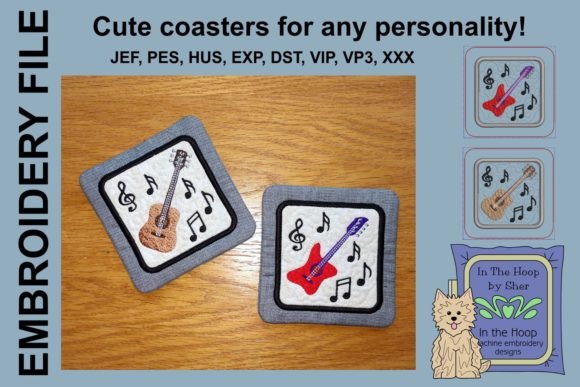
Guitar Coasters: A Designer's Practical Review
As someone who has spent years testing machine embroidery designs for both personal craft projects and commercial client work, I approach every new file with a mix of excitement and skepticism. The market is flooded with digital assets that look stunning in a preview but fall apart under the needle. When I first opened the Guitar Coasters design file, my immediate reaction was one of genuine interest. This isn't just another generic icon; it feels like a cohesive set built with a specific aesthetic in mind. For any Etsy seller, small shop owner, or hobbyist looking to expand their catalog into home decor or music-themed gifts, this design offers a unique opportunity, provided you understand how to execute it correctly.
First Impressions: Visual Weight and Theme
The initial preview of Guitar Coasters strikes a balance between intricate detail and functional simplicity. The mood is undeniably warm and nostalgic, tapping into the universal love for Music without feeling cliché. The layout suggests a set rather than a single isolated motif, which is crucial for creating a "finished product" feel. In the world of handmade goods, customers often pay a premium for sets that look intentional. The vibrant colors mentioned in the description promise a pop of energy, but as a designer, I know that thread selection is where the magic truly happens. The shapes are distinct enough to hold their own against busy backgrounds, yet detailed enough to satisfy a collector's eye.
When visualizing this as a tote bag design or a set of embroidered coasters, the personality of the piece shines through. It doesn't scream for attention like a neon logo; instead, it whispers sophistication. This makes it an excellent candidate for boutique branding or high-end personalized gifts. If you are planning to sell these as part of a holiday collection, the craftsmanship implied by the design suggests a level of quality that builds customer trust immediately.
Real-World Application: From File to Fabric
Let's talk about a real scenario. Imagine you are preparing a custom order for a local band merchandise booth or a music teacher's retirement gift. You decide to use Guitar Coasters on a heavy cotton canvas tote bag. Here is where the practical evaluation begins. The design's density appears well-managed, which is critical when working with thicker fabrics. If the stitch density were too high, the fabric would pucker, ruining the drape of the bag. Conversely, if it were too sparse, the design might look cheap.
In my experience, designs like this work exceptionally well on custom apparel such as sweatshirts. Picture a soft, heather-grey crewneck with the guitar motif stitched on the left chest. The contrast between the dark thread and the light fabric would make the details pop. However, if you were attempting this on a stretchy jersey knit for a t-shirt, you would need to be incredibly careful. The intricate nature of the guitars means that any stretching during stitching could distort the curves of the necks and bodies. Always test your hoop size and tension settings on a scrap piece of the actual fabric before committing to the final garment.
For those running a craft business, consider using these as an embroidered patch. Cutting out individual coasters from a dense backing fabric allows you to sell them as iron-on patches for denim jackets or backpacks. This expands your product line significantly without requiring new machinery. The detailed craftsmanship ensures that even at a smaller scale, the image remains recognizable and attractive.
Where Caution is Required
While Guitar Coasters is versatile, it is not a "one-size-fits-all" solution. There are specific situations where this design requires extra attention. First, avoid using it on very thin or delicate fabrics like silk or lightweight linen unless you use a heavy-duty stabilizer. The weight of the stitches could overwhelm the material, causing warping. Similarly, if you are working with dark fabrics, ensure your thread colors offer sufficient contrast. The intricate lines might get lost if the color palette isn't adjusted for the background.
Another area of caution involves curved surfaces, such as caps or hats. The geometry of a guitar is linear and angular in many parts. Mapping this onto a curved brim can lead to registration issues where the top and bottom layers of the stitch don't align perfectly. If you plan to use this on a hat, run a test stitch and inspect the result closely. Also, be mindful of products that require frequent washing, like kitchen towels or baby clothes. While Embroidery is generally durable, dense areas of satin stitch can sometimes snag or fray over time if the wash cycle is too harsh. For baby embroidery, always check that there are no loose threads or sharp points that could irritate sensitive skin.
Maximizing Value and Professionalism
The true value of Guitar Coasters lies in its ability to elevate a simple item into a statement piece. When I review a design for potential commercial use, I ask myself: Does this make the customer feel special? The answer here is yes. Whether it's a wedding gift for a guitarist husband or a centerpiece for a music-themed nursery, the design adds a layer of thoughtfulness that mass-produced items lack.
To maximize this value, pay close attention to your presentation. Use high-quality printable mockups to showcase the design on various products before listing them. Show the texture of the thread and the depth of the stitching. Customers buying from digital product sellers or handmade shops want to see exactly what they are getting. A clear, professional image builds engagement and reduces returns.
Furthermore, consistency is key for brand building. If you decide to make Guitar Coasters a signature item, maintain consistent thread palettes and fabric choices across all your listings. This helps establish a recognizable style for your shop. Remember to verify the licensing terms before selling finished items. As a responsible maker, you must confirm whether the machine embroidery design allows for commercial resale of the physical product or if it is limited to personal use.
Practical Notes for the Designer
- Test Run: Always stitch out a sample on scrap fabric to check for puckering or skipped stitches.
- Stabilizer Choice: Use a tear-away stabilizer for woven fabrics and a cut-away for knits to support the fill stitch and satin stitch areas.
- Color Contrast: Adjust your thread colors based on the fabric background to ensure the intricate details remain visible.
- Mockup Testing: Create black and white previews to assess the design's clarity without the distraction of color.
- Licensing Check: Confirm you have the right to sell items made with this embroidery file before launching your product.
Ultimately, Guitar Coasters is a strong addition to any designer's toolkit. It bridges the gap between artistic expression and practical utility. By understanding its strengths and limitations, you can create handmade products that not only look beautiful but also stand up to the rigors of daily use. Whether you are a seasoned pro or a creative entrepreneur just starting out, taking the time to evaluate a design like this ensures that your final project is nothing short of exceptional.