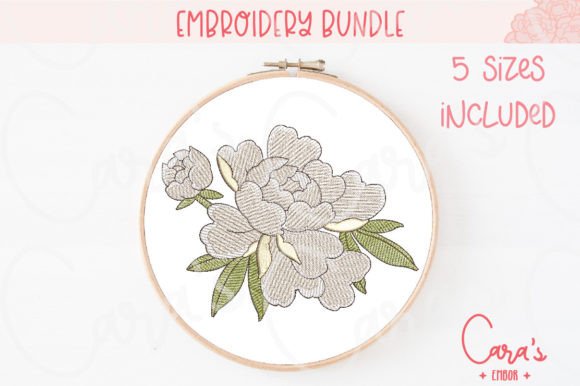
Peonies: A Professional Embroidery Design Review
As an experienced embroidery designer who has spent years refining brand identity for small businesses, I approach every new machine embroidery design with a critical eye. When evaluating a digital asset like Peonies, the goal is not just to see if it looks pretty, but to determine if it functions as a robust tool for commercial use. This review breaks down how this specific floral motif performs in real-world scenarios for apparel decorators, Etsy sellers, and merch creators looking to elevate their product lines.
First Impressions: Elegance Meets Commercial Viability
The initial visual impact of Peonies is undeniably strong. Falling under the category of Wedding Flowers, the design exudes a sense of classic elegance and soft sophistication. For a business owner, this aesthetic translates immediately into feelings of trust, care, and premium quality. Whether you are running a boutique florist, a high-end bakery, or a handmade accessory brand, the organic curves and layered petals suggest a handmade product ethos that customers crave.
However, beauty alone does not guarantee success in commercial embroidery. The true test lies in how the design holds up when translated from a screen to physical fabric. Does the complexity of the flower overwhelm smaller surfaces? Are the lines distinct enough for quick recognition on a busy street? In my assessment, Peonies strikes a delicate balance between decorative flair and structural integrity, making it a versatile candidate for various applications, provided it is used correctly.
Strategic Applications for Small Business Merchandise
For small business owners, the right embroidery file can transform generic stock items into branded assets. Here is how Peonies performs across different merchandise categories:
- Staff Uniforms and Aprons: An apron embroidery featuring Peonies adds a touch of warmth to service staff in cafes or boutiques. It softens the professional look without appearing too rigid. On chef coats or barista shirts, a chest logo accent using this design creates a memorable visual signature.
- Branded Patches: Creating an embroidered patch from this design allows for versatility. You can sew these onto denim jackets, tote bags, or even backpacks. The floral nature of Peonies makes it perfect for seasonal collections or limited-edition drops.
- Cap Embroidery: While caps have limited space, the central bloom of Peonies can work well as a front panel design if scaled appropriately. It offers a softer alternative to bold text logos, appealing to a demographic that values aesthetics over aggressive branding.
- Tote Bags and Accessories: A large-scale application on a canvas tote bag design showcases the intricate details of the flower. This is ideal for farmers' markets, craft fairs, or as a thank-you gift for loyal customers.
- Product Packaging Accents: Beyond clothing, consider using a smaller version of the design on fabric tags or labels for your products. This subtle detail reinforces your brand story and elevates the perceived value of the finished product.
Critical Considerations for Production Quality
While the potential for Peonies is high, there are significant constraints outlined in the product description that must be respected to maintain quality. The description explicitly states: "Resizing or editing the design s is not recommended and the quality of the design s cannot be guaranteed if y." As a professional, I take this warning seriously. Attempting to force this design into a hoop size it was not intended for can lead to disastrous results.
Understanding Stitch Density and Fabric Texture
Floral designs often suffer from excessive stitch density when resized incorrectly. If you shrink Peonies too much for a tiny patch or a cap brim, the threads may bunch together, creating a stiff, plastic-like texture that ruins the drape of the fabric. Conversely, enlarging it beyond its original parameters can leave gaps in the fill stitches, exposing the backing material and looking unprofessional.
Fabric choice is equally critical. On textured fabrics like heavy wool or thick fleece, the fine details of the petals might get lost. For smooth materials like cotton twill or poplin, the design shines. Always test the design on the actual fabric you intend to sell. Use the proper stabilizer to prevent puckering, especially around the curved edges of the flower petals.
Color Contrast and Visibility
The visual impact of Peonies relies heavily on thread colors. While the default palette may be romantic pastels, business branding often requires higher contrast. Ensure that the thread colors you select stand out against the garment background. A light pink peony on a white shirt may disappear, whereas a deep burgundy or navy version could command attention. Before committing to a full production run, create a printable mockup to visualize how the color scheme aligns with your overall brand guidelines.
Impact on Brand Identity and Customer Trust
In the competitive landscape of small business merch, consistency is key. Using a cohesive design like Peonies across your custom apparel, packaging, and promotional items builds a recognizable visual language. When a customer sees the same elegant floral motif on a staff apron, a shopping bag, and a product label, it reinforces the idea that your business is established and attentive to detail.
This consistency directly influences customer trust. High-quality embroidery signals that you care about the longevity and presentation of your goods. It moves your brand away from the "cheap" perception often associated with screen printing or vinyl transfers. Instead, it positions your business as a purveyor of premium, tactile experiences. For handmade brands and Etsy sellers, this distinction can justify higher price points and foster deeper buyer engagement.
Practical Designer Notes for Implementation
To ensure Peonies delivers the best results for your business, follow these practical steps before launching your collection:
- Test in Black and White First: Print a grayscale version of the design to check the line weight and spacing. This helps identify any areas where stitches might merge unintentionally.
- Verify Hoop Size: Confirm the exact dimensions required by the digital embroidery file. Do not guess; measure your hoop and compare it to the design specs.
- Check Licensing Terms: Before using this design for commercial embroidery, verify that your license covers the volume of items you plan to produce. Ensure you are compliant with terms regarding resale and distribution.
- Create Client Mockups: If you are offering this as a service, present realistic photos of the design on actual garments to manage client expectations.
- Avoid Over-Editing: Respect the warning against resizing. If you need a different size, look for a variation of the design or commission a custom digitization rather than stretching the existing file.
Ultimately, Peonies is a powerful asset for businesses that understand its limitations and strengths. By treating it as a strategic element of your design assets rather than just a decoration, you can create a cohesive, high-quality brand presence that resonates with customers. Whether adorning a uniform, a patch, or a special event giveaway, this design has the potential to add a layer of timeless charm to your commercial projects when executed with precision and care.